
Your needs, this model
Does it fit your priorities?
Do you want a citrus-only tool rather than a fruit-and-vegetable juicer?
The CTG-00-CJ is listed for citrus fruit; it has no produce feed chute.
Explore this need in the finder →Would you rather provide the motion by hand than use an electric citrus press?
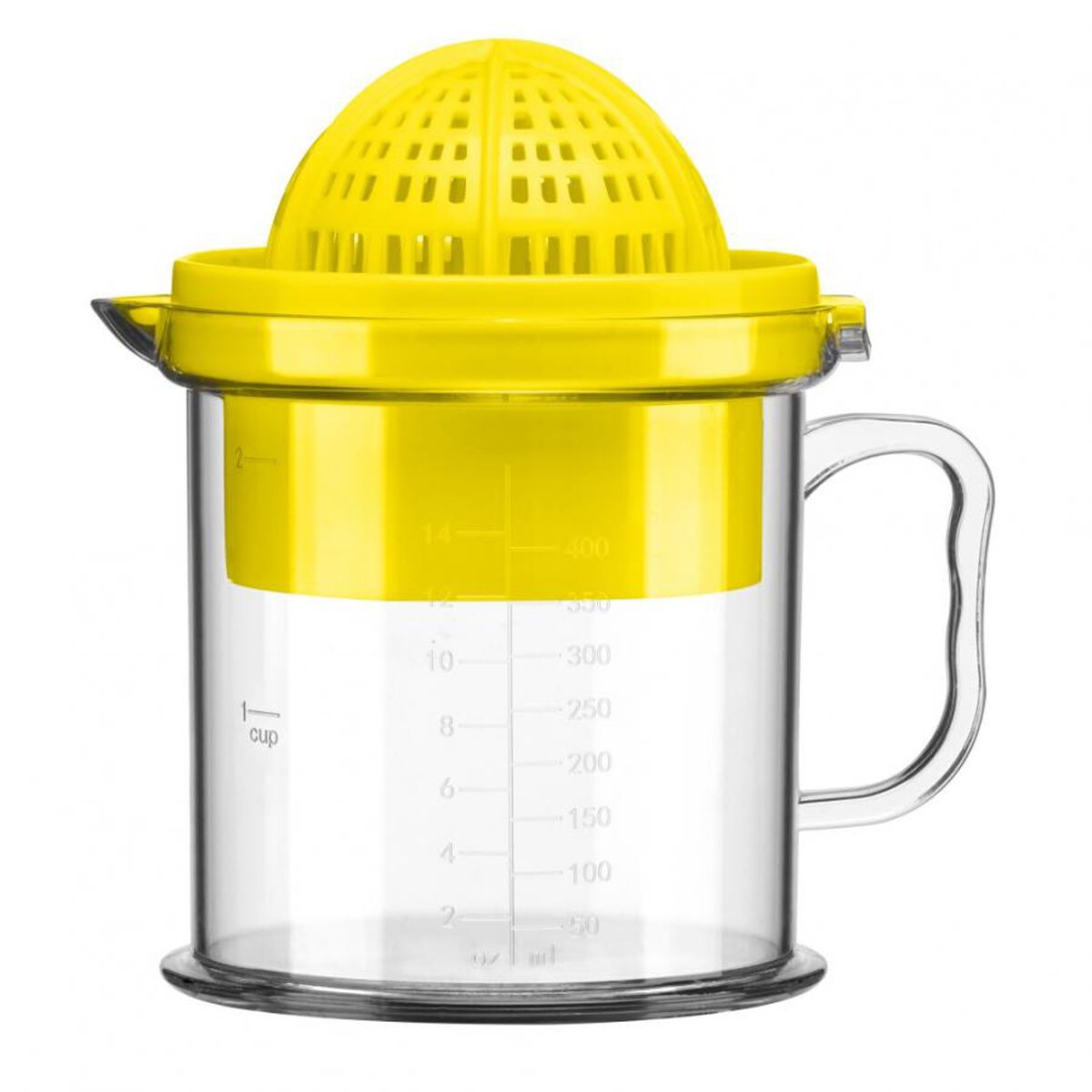
The exact product page and image show a passive, hand-driven reamer form. Select hand operation only if you want that rather than a powered cone.
Explore this need in the finder →Do you need an integrated marked two-cup container for recipe-sized amounts?
Cuisinart lists a two-cup collection container marked in cups, ounces, and milliliters; it is not described as a storage carafe.
Explore this need in the finder →Is a supplied lidded carafe essential?
The CTG-00-CJ has a marked spouted container but no listed lid or lidded carafe.
Explore this need in the finder →Will a published appliance height limit decide whether the tool fits?
No body dimensions are published in the reviewed exact sources, so a hard maximum-height requirement cannot be confirmed.
Explore this need in the finder →The Cuisinart CTG-00-CJ is a small, hand-operated citrus juicer: a reaming cone sits above a marked collection container, so it asks for your hand rather than a motor. Cuisinart lists a two-cup bowl with ounce and milliliter markings, a pour spout, a nonslip base, dishwasher-safe care, and a lifetime warranty. That is a focused tool for lemons, limes, oranges, and similar fruit—not a substitute for a feed-chute machine or for a high-volume powered press.
Choose it when the task is citrus and the batch is small
This form works best when citrus is an ingredient you juice now and then: a few limes for a recipe, orange juice for a small serving, or lemon juice to measure directly into cooking. The integrated container avoids having to hold a separate cup under a motorized outlet, and its markings help you see how much you have collected. The nominal two-cup scale is useful for recipe-sized amounts, but it is not a large pitcher for a breakfast table or a week's worth of juice.
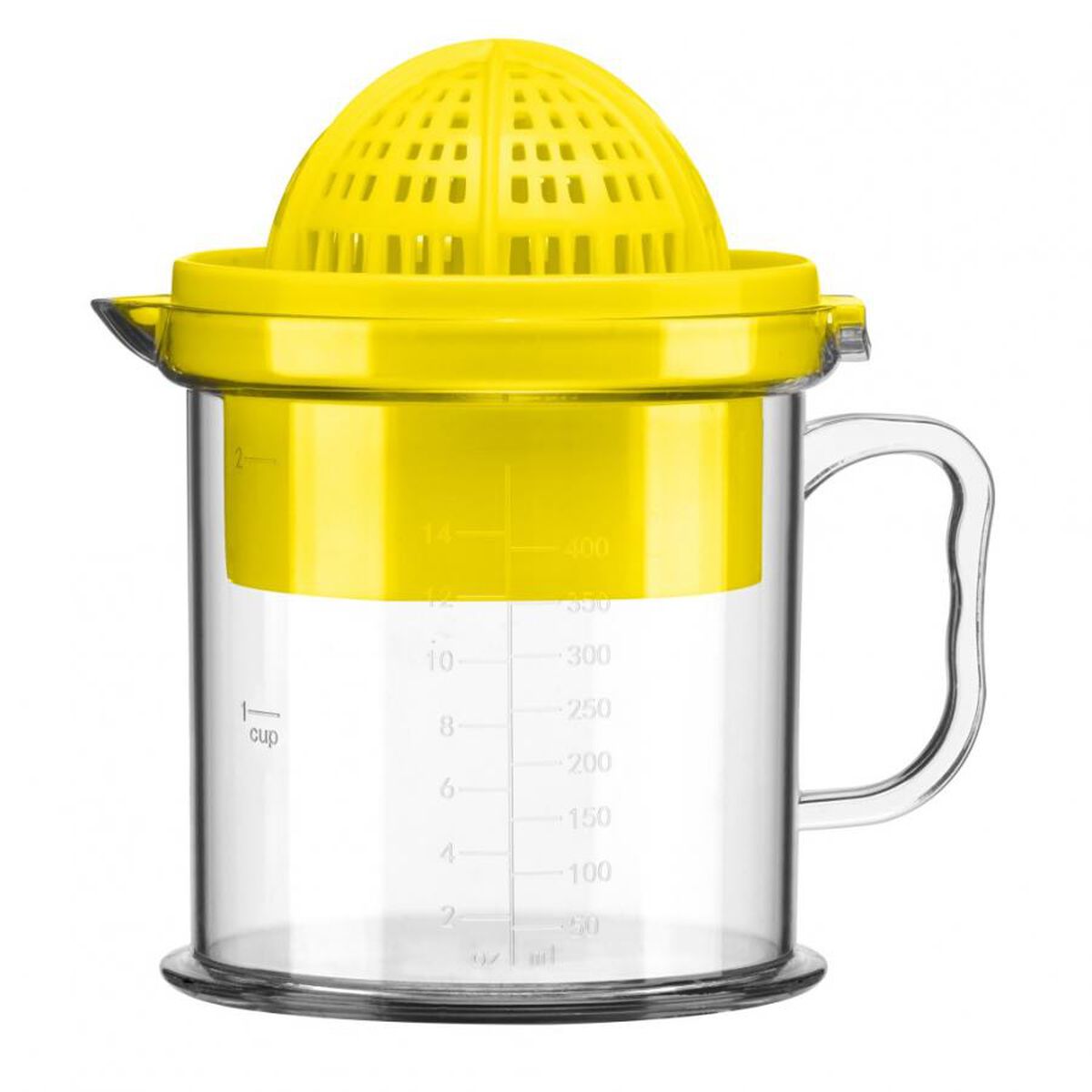
The maker's official image shows a hand-driven reamer and strainer assembly above the container. A practical routine is to halve the fruit, press its cut face onto the cone, and rotate by hand while the nonslip base steadies the bowl; the one-page use-and-care sheet does not provide a step-by-step juicing sequence, so that technique is an interpretation of the tool's visible construction, not a quoted instruction. You still handle each half and apply the pressure yourself. If you repeatedly juice a large bowl of oranges, that repetitive motion may matter more than the lack of a motor's noise or cord.
What the two-cup container changes
The container is the key distinction from Cuisinart's powered citrus cones. The CTG-00-CJ collects juice in its own marked, spouted bowl. The current CCJ-500P1 has a powered reamer and a snap-up outlet for pouring into a glass, but no separately listed lidded carafe. The earlier CCJ-900 and CCJ-900P1 have a carafe in their package descriptions; the P1 page and its series booklet disagree about the carafe capacity, so do not assume the two codes are interchangeable. If you want a powered reamer, adjustable pulp labels, or a more repetitive-work-friendly setup, compare those separate reviews rather than treating this manual tool as a smaller electric model.
Cuisinart identifies the CTG-00-CJ container as two cups and says its markings include cups, ounces, and milliliters. That makes measuring and pouring simple, but the listing does not call it a lidded storage vessel. Pour into a covered bottle or a serving glass if you need to chill the juice. No published maximum yield per fruit, extraction-time measurement, or strain percentage is available, and the maker does not advertise selectable pulp settings. Do not turn the visible perforations into a promise that a particular amount of pulp or seeds will be removed.
Care is simple, but the instructions are brief
The product page says the tool is dishwasher safe, and the one-page Use and Care sheet also says dishwasher safe. That is an unusually direct cleanup claim for a citrus accessory, though the sheet does not name a rack position or detail how the components should be separated. Rinsing the cone and container after use is still sensible: citrus fibers and sticky juice are easier to remove before they dry. The nonslip base is useful while pressing, but Cuisinart does not publish its material or a special care instruction for it. Avoid guessing about parts or dishwasher placement that the maker does not specify.
The same brief sheet documents the lifetime warranty for Cuisinart Tools & Gadgets in the U.S. and Canada. It applies to the original purchaser under normal home use and lists exclusions, including shipping and handling, accident, misuse, and abuse. The page does not publish a detailed construction breakdown, exact body dimensions, or weight. If a drawer organizer or a tight shelf is part of your decision, measure the exact seller's item rather than relying on this listing for a footprint.
Who should choose it—and who should keep looking
Choose the CTG-00-CJ if you want a simple, no-motor way to collect small citrus amounts in a marked bowl, and you do not mind doing each half by hand. In the finder, select citrus-only pressing and the hand-operated option; do not select a required lidded carafe, a published appliance-height limit, a powered control, or a 32-ounce batch minimum. The finder treats unpublished dimensions and capacities as unknown, not as a fit.
For frequent pressing, compare the powered Cuisinart CCJ-500P1: it adds a motorized cone, low/medium/high labeled pulp positions and a direct-glass outlet, while keeping the fruit preparation step. For a carafe or a hand-lever style, look at the exact Cuisinart CCJ-900 family or Breville BCP600 and 800CPXL; their mechanisms and collection methods differ. If you need juice from apples, carrots, or greens, choose a centrifugal or slow extractor instead. This is a source-based assessment, not a hands-on test: there are no measured force, yield, time, durability, or sound comparisons. See Cuisinart's CTG-00-CJ product page and linked Use and Care sheet for the exact model and warranty terms.
Key details at a glance
| Extraction method | Dedicated citrus reamer or cone press |
|---|---|
| Dedicated Quiet selector label | No |
| Controls and use | No electric motor or selectable speed control is listed; the tool's form is hand-operated. |
| Manufacturer jug label | No separate lidded juice jug or storage carafe is listed. |
| Supplied cup nozzle | No |
| Manual-described lower-noise juicing range | No |
| Body-fit measurement note | No exact product dimensions are published in the inspected manufacturer page or use-and-care sheet. |
| Hand-powered operation | Yes |
| Removable parts dishwasher-safe per manual | Yes |
Use the exact model’s instructions for operating limits, supplied equipment and version differences.
Sources for this assessment
- Cuisinart U.S. exact CTG-00-CJ product page; rendered page observation archived because direct retrieval returned HTTP 404
- Cuisinart CTG-00-CJ one-page Use and Care / Lifetime Warranty sheet linked from the exact page
- Cuisinart U.S. Juicer Manuals directory; rendered page states 9 of 9 results and includes exact CTG-00-CJ card
- Cuisinart exact CTG-00-CJ product image linked from the U.S. product page
- Exact-model CPSC recall reconciliation not completed
Now check the model against your kitchen.
Use the finder for extraction style, batch, cleanup, control, and counter-fit requirements.