
Your needs, this model
Does it fit your priorities?
Do you want a citrus-only press rather than an all-produce machine?
CCJ-900 is an electric reamer for halved citrus; it has no feed chute for apples or greens.
Explore this need in the finder →Is a lidded carafe for small-batch refrigerator storage essential?
The exact unsuffixed page and its series manual name a 24-ounce glass carafe with lid.
Explore this need in the finder →Would low, medium, or high pulp control help?
The page and booklet document all three adjustable sieve positions; no percentage is provided.
Explore this need in the finder →Will the glass you use under the outlet fit?
The linked CCJ-900 Series booklet sets a 4 3/4-inch maximum glass/container height below the spout.
Explore this need in the finder →Do you require at least 32 ounces in the supplied vessel?
The documented glass carafe is 24 ounces, so it falls below a strict 32-ounce requirement.
Explore this need in the finder →Would an adjustable pulp selector help you choose how much the sieve catches?
The linked CCJ-900 Series booklet identifies three selectable sieve positions: low, medium, and high. They are maker labels, not a quantified pulp result.
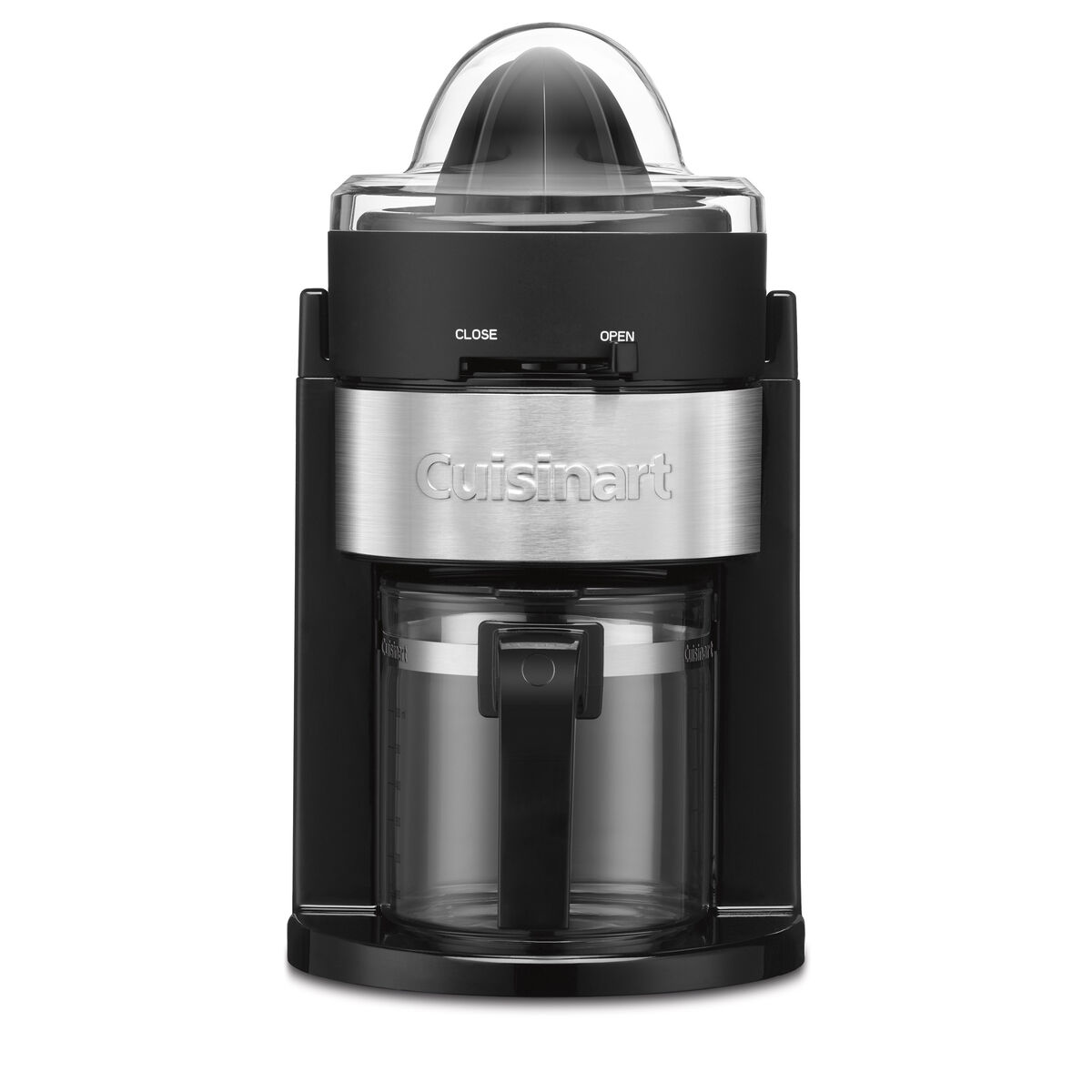
Explore this need in the finder →The unsuffixed Cuisinart CCJ-900 is a discontinued, out-of-stock electric citrus juicer with a glass carafe. Keep the exact model code: its product page calls the carafe 24 ounces, and its linked CCJ-900 Series booklet also describes a 24-ounce carafe. Cuisinart’s separate CCJ-900P1 page instead specifies 22 ounces, even though its image and attached series booklet appear to reflect 24. For the non-P1 CCJ-900, the two direct sources agree. That makes this older code a distinct reference for a particular seller offer, not a reason to collapse the P1 suffix or assume parts fit across codes.
When the carafe matters more than broad produce use
The intended routine is easy to understand: wash and halve citrus, press each half against the universal reamer, and collect the juice in the clear, lidded glass carafe. The page also lists use with a single glass. The 24-ounce carafe can be taken to the refrigerator with its lid, an advantage over a press whose juice runs straight into an unmarked drinking glass. It remains a modest batch vessel. If a 32-ounce minimum is essential, it does not reach that threshold; the vessel volume also does not predict fruit yield.
This is citrus-only equipment. The cone is described for citrus from limes through grapefruits. It has no produce chute, cutting basket, or separate green-juice mode, so do not shortlist it for apples, carrots, leafy greens or whole-produce juicing. If your household already owns a multi-produce extractor and only wants a way to press lemon, orange and grapefruit halves, the dedicated task may be a good fit. If citrus is occasional and you value counter space, a manual reamer is a simpler alternative with no motorized body or electrical parts.
The operating choices are pulp and pressure
The CCJ-900 offers low, medium and high pulp settings. Its reamer is described as auto-reversing, and the manual explains that changing pressure can change the direction; there is no user-selected speed dial. The cover activates the Fast-Spin step after a batch of halves is finished, helping remove remaining liquid from the pulp. The manual gives fruit-handling tips and says the sieve may look full after about a pound of fruit, at which point it describes removing rind and pressing the cover to spin. These are operating instructions, not independent yield data. The manufacturer's claims about efficient juicing do not establish how much juice any specific fruit will produce.
A lever-controlled drip spout can be closed before lifting away the carafe or glass. The built-in cord storage is useful when the machine is put away. These conveniences address serving and storage; they do not remove the work of halving fruit, positioning it, pressing it, and rinsing the reamer/sieve assembly.
Fit and cleanup are more than a number on a spec sheet
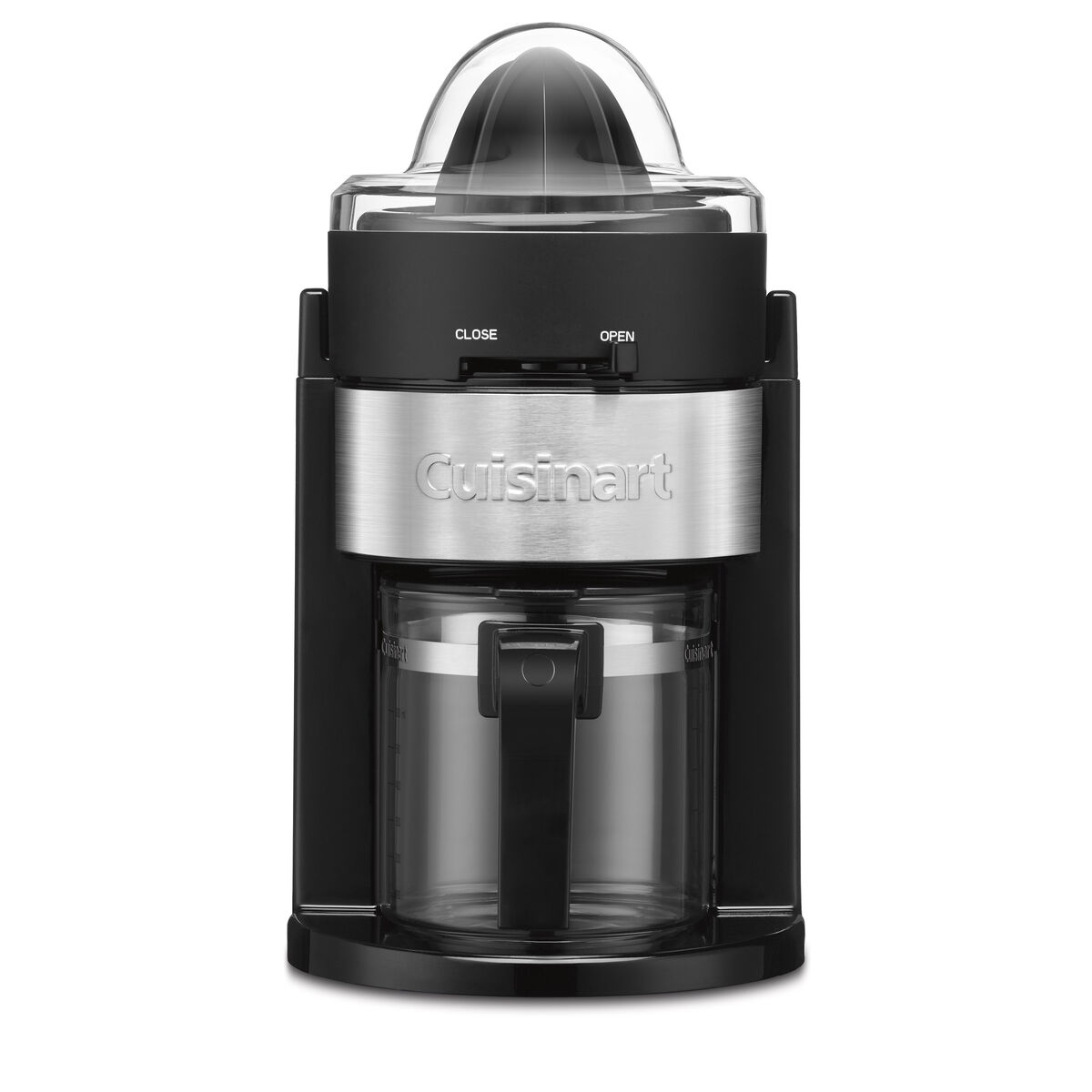
The product page lists 6.89 inches long by 8.19 inches wide by 12.32 inches high. Map the listed length to front-to-back depth for a first counter check, then add clearance for the fruit, lift-off cover and carafe below the spout. The taller carafe must fit under the outlet while in use. The official product image shows the black/stainless unit, juice carafe and citrus, with volume marks through 24 ounces; Cuisinart does not identify whether this is a photograph or a render.
The maker calls the removable parts dishwasher-safe. The linked series manual names the juice container, reamer/sieve assembly, carafe and lid for rinsing and top-rack cleaning, while the stainless motor housing is wiped with a damp cloth and must not be immersed. Follow the exact manual for any used machine and rinse pulp promptly. A secondhand unit also makes the condition of its carafe lid, reamer, sieve, and motor worth checking before purchase; the manual page is evidence of intended components, not a guarantee that a used listing includes them.
Shopping an earlier model responsibly
Consider the CCJ-900 when a seller has the exact unsuffixed code, you want the maker-documented 24-ounce carafe format, and the small citrus-only workflow fits your routine. Since Cuisinart marks it discontinued and out of stock, shop by the exact code and inspect the actual offer; no current maker stock, third-party condition or accessory compatibility is implied. The finder keeps earlier models opt-in. Select citrus-only extraction and “earlier models” to compare it with the CCJ-900P1 and other documented citrus presses; a 32-ounce minimum rejects the 24-ounce carafe. If you need broader produce use, compare centrifugal or slow juicers rather than treating “juicer” as one interchangeable appliance type.
There is no sound level, measured output, or time-per-fruit test in the sources reviewed. This is a documentation-based assessment. The exact Cuisinart CCJ-900 page and its linked series instruction booklet are the best reference when checking a used offer.
Key details at a glance
| Extraction method | Dedicated citrus reamer or cone press |
|---|---|
| Included juice receiver capacity | 24 fl oz |
| Adjustable citrus pulp control | Yes |
| Speed control | On/off with pressure-activated cone |
| Listed width | 8.19 in |
| Listed depth | 6.89 in |
| Listed height | 12.32 in |
| Dedicated Quiet selector label | No |
| Controls and use | The user centers a halved citrus fruit on the motorized reamer and applies pressure. The manual says the cone may reverse direction when pressure is removed and reapplied. There is no selectable speed control. |
| Manufacturer jug label | 24 oz easy-pour glass carafe with lid (manufacturer label; container size, not fruit yield). |
| Body/base construction | Stainless-steel housing/accents on a black base, as described by Cuisinart; the manufacturer does not enumerate every component material. |
| Body-fit measurement note | Manufacturer order is L × W × H; listed length is mapped to front-to-back depth for hard-fit matching. Allow extra operating room for fruit, cover lift, container placement, and removable-part handling. |
| Removable parts dishwasher-safe per manual | Yes |
Use the exact model’s instructions for operating limits, supplied equipment and version differences.
Sources for this assessment
- Cuisinart U.S. discontinued unsuffixed CCJ-900 exact product page; rendered observation preserved because direct retrieval returned HTTP 404
- Cuisinart CCJ-900 Series instruction and recipe booklet linked from the exact product page
- Cuisinart U.S. Juicer Manuals directory (showing 9 of 9 results)
- Official Cuisinart black-stainless CCJ-900 product image with 24-ounce carafe
- CPSC exact-model recall review not completed for this model
Now check the model against your kitchen.
Use the finder for extraction style, batch, cleanup, control, and counter-fit requirements.